

In 1987, a concept and a dream by partners Robert Faber and Anna Cordova, became a small startup. Mr. Faber’s electronic engineering and interest in filmmaking coupled with Ms. Cordova’s managerial experience made the FILMLOOK® process a business reality in 1989, a prelude to the era of digital filmmaking.
In 1992 FILMLOOK earned the Academy of Television Arts & Sciences award for outstanding achievement in engineering development. This was a landmark for FILMLOOK’s acceptance into the television entertainment industry.
Since 2001 the licensing and acceptance of Patented 24P Camera Technology by nearly all camera manufacturers opened the floodgates of Digital Filmmaking as well as becoming the industry standard.
There was a better way.
We saw a huge void in the picture finishing landscape and focused our energies on a new business venture and we grew. Before long, producers discovered the time and cost savings of the workflows that we implemented on projects and they began turning to us for assistance.
Our Services
Why choose FILMLOOK Media and Post? We make videos look like film, we make 24P look better. Over three decades of dedication of the look of film gives us edge. We can make your 24P the best it can be. After all, we invented* it. We liscensed our 24P patent to SONY, PANASONIC, ARRI, PANAVISION, IKEGAMI, THOMSON, HITACHI, CANON, JVC, FUJIFILM, NIKON, PENTAX, CASIO and ICONIX. What does your 24P look like? It looks like film to us.
D Cinema packaging

FILMLOOK offers D-Cinema Packaging. We can convert your video or data master for Digital Cinema projection.
Color grading
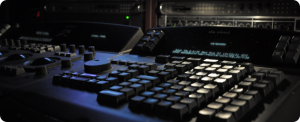
Whether a project is bound for broadcast or theatrical release, our colorists and our da vinci Resolve system satisfies the needs of even the most demanding clientele. For decades our colorists have worked on high profile television and theatrical projects for every major studio and production company in town. Allow us to transform your visual dreams into a visionary reality.
Quality control
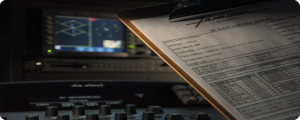
Every project that passes through Editing, Duplication, Encoding, or Conversions should be sent through a rigorous quality control process, ensuring deliverable masters.
Audio post
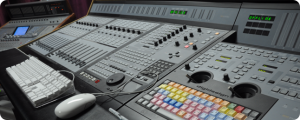
We offer award winning audio design and post services, providing sound supervision, sound mixing, creative sound design services, sound editorial, ADR/VO, and Foley recording.
Blu Ray and DVD mastering
FILMLOOK offers Blu-Ray and DVD mastering. We can provide Menus Navigation, Authoring, Graphic Design, Subtitling, Multi-Language Tracks, Regional Programming and Web Linking.
Editorial Services

Our edit bays offer workflows for all pro NLE applications, traditional online, conform and in-house DIT as well as a host of post production services, including data managing services, along with storage solutions. We also offer HD, 2K, 4K and UHD finishing, Closed Captioning, DCP and worldwide distribution in all formats and resolutions. We transcode and convert deliverables from any format to any format as well as LTO data backup, data duplication and data transfer of all your content.
Duplication
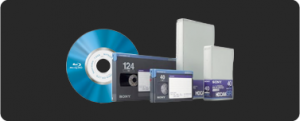
FILMLOOK can handle a vast array of formats from VHS to HDCAM SR.
*REFERENCE: The scope of the invention relating to 24P is set forth in the U.S patent 5,335,013, Japen Patent 2818622, and 0622000 for numerous European countries.
Our Clients